2026-07-20
•
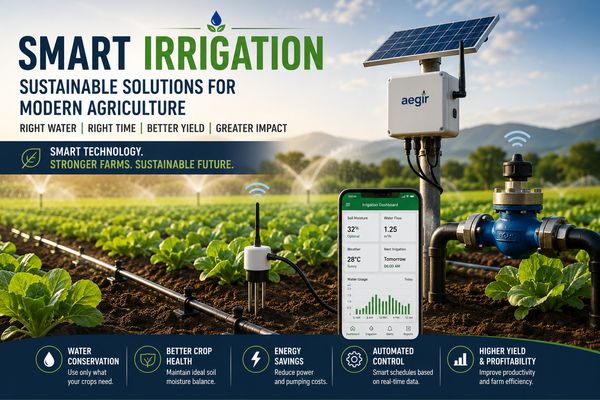
Water is one of agriculture's most valuable resources. As climate change, water scarcity and food demand continue to increase, farmers need smarter ways to manage irrigation. Smart irrigation systems combine IoT technology, soil moisture sensors, weather data and automation to deliver the right amount of water at the right time.
Modern irrigation also integrates with smart water management systems and IoT-based water management solutions, helping improve productivity while conserving water.
Traditional irrigation follows fixed schedules, often leading to overwatering or underwatering. Smart irrigation continuously analyses field conditions and applies only the required amount of water.
Benefits include:
Soil moisture sensors measure water available in the root zone and automatically trigger irrigation only when required.
When combined with smart water meters, farmers gain complete visibility into irrigation performance and water usage.
Weather controllers automatically adjust irrigation based on rainfall, humidity, temperature, wind speed and solar radiation, preventing unnecessary watering and conserving valuable resources.
IoT technology enables farmers to monitor irrigation systems remotely using smartphones or computers.
Advantages include:
Learn how IoT leak detection improves water efficiency.
Smart irrigation also contributes to the water-energy nexus by reducing pumping energy.
Smart irrigation is widely used in:
Common challenges include:
However, declining IoT costs continue to accelerate adoption.
Smart irrigation uses sensors, IoT devices and weather data to automatically optimize irrigation schedules.
It irrigates only when soil moisture reaches a defined threshold, preventing overwatering.
Yes. Maintaining optimal soil moisture promotes healthier crops and consistent yields.
Smart irrigation is transforming agriculture by improving water efficiency, reducing costs and supporting sustainable farming. As water scarcity increases, IoT-enabled irrigation will become an essential technology for modern agriculture.
Looking to implement smart irrigation or water monitoring solutions?
Explore Aegir's Smart Water Management Solutions to improve irrigation efficiency, monitor water consumption and support sustainable agriculture.
2026-02-25
2026-09-24


