2026-08-07
•
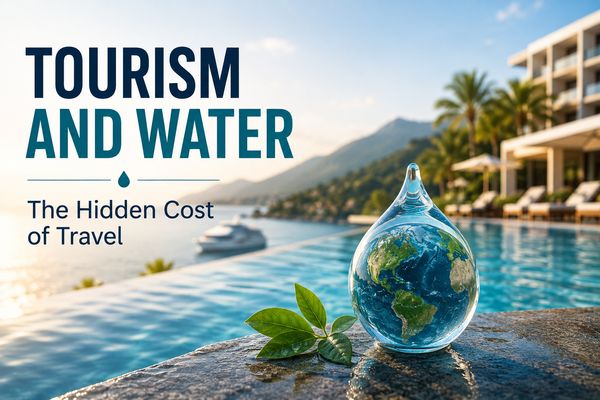
Every year, more than a billion people travel across borders in search of sun, sand, snow and scenery. Tourism is a major contributor to the global economy, but behind the industry's growth is a less visible resource challenge: water consumption.
Hotels, resorts, golf courses, cruise ships and tourism infrastructure can place significant pressure on local water resources. This is particularly important in destinations where freshwater availability is already limited or seasonal demand is high.
Understanding the water footprint of tourism is therefore essential for building more resilient and sustainable destinations.
Tourists can use considerably more water than local residents, particularly in luxury accommodation. Hotel water consumption can include:
The individual activities may appear small, but their combined impact becomes substantial when multiplied by thousands or millions of visitors.
For hotels and resorts, measuring consumption is an important first step. Smart water meters can provide detailed usage data and help identify where water is being consumed, wasted or lost.
Explore Aegir's smart water management and metering solutions for real-time water monitoring.
Tourism demand often peaks when water availability is already under pressure. Hot and dry seasons can increase irrigation requirements while simultaneously increasing visitor numbers.
This creates a potential mismatch between:
Water scarcity can become particularly challenging for islands, coastal destinations, arid regions and other locations with limited freshwater resources.
The broader relationship between increasing demand, groundwater depletion and climate pressure is explored in Aegir's article on water overuse, groundwater and climate change.
Different tourism activities create different types of water demand. Understanding these differences can help destination managers prioritize conservation measures.
Many beach and island destinations have naturally limited freshwater supplies. Tourist arrivals can peak during the dry season, increasing pressure on local water sources precisely when rainfall and recharge may be limited.
Excessive groundwater extraction can also increase the risk of saltwater intrusion in vulnerable coastal aquifers.
Golf courses can require large volumes of water to maintain fairways and greens, especially when they are located in dry climates.
Using drought-tolerant landscaping, efficient irrigation and real-time water monitoring can help reduce unnecessary consumption.
For broader irrigation water-saving practices, see Aegir's guide to water conservation and smart irrigation technologies.
Climate change is shortening natural snow seasons in some regions, increasing reliance on artificial snowmaking. Snowmaking can require significant quantities of water and energy, creating an additional resource-management challenge.
Cruise ships bring large numbers of visitors to ports for relatively short periods. This can create short-term spikes in water demand without necessarily contributing proportionally to the permanent water infrastructure of the destination.
One of the most important issues surrounding tourism water use is how the benefits and costs are distributed.
Tourism can generate employment, tax revenue and economic development. However, local communities may experience water shortages or restrictions when demand increases during peak tourist seasons.
In some destinations, large tourism facilities may rely on private borewells, desalination systems or tanker supplies. While these measures can help individual properties maintain operations, they do not necessarily solve wider community water challenges.
Sustainable tourism therefore needs to consider not only how much water the industry uses, but also where that water comes from, how efficiently it is used and whether local communities have equitable access to water.
Climate change is intensifying the connection between tourism and water.
Rising temperatures can increase evaporation and irrigation requirements. Longer dry seasons can reduce freshwater availability, while irregular rainfall makes water planning more difficult.
At the same time, changing climate conditions can alter travel patterns. Destinations that were previously less exposed to high tourist demand may experience increased visitor numbers, potentially creating new water-management challenges.
Coastal and island destinations face an additional risk from sea-level rise. Saltwater intrusion can damage fragile freshwater sources, particularly where groundwater extraction is already high.
Understanding the wider relationship between water use and climate change is important for tourism operators planning long-term resilience.
Hotels and resorts can take practical steps to reduce their water footprint without compromising guest experience.
You cannot effectively manage what you do not measure.
Installing smart water meters at key consumption points can help hospitality businesses understand water-use patterns across:
Aegir's smart water meters and monitoring solutions can support real-time consumption tracking and help identify abnormal usage.
For a detailed look at hospitality water efficiency, read Water Conservation in Hotels: Sustainable Practices for Eco-Friendly Hospitality.
Leaks in guest rooms, pipelines, tanks, irrigation systems and pools can result in significant water losses if they remain unnoticed.
Smart monitoring can identify unusual consumption patterns and provide alerts when abnormal usage occurs.
Learn more about leak detection using smart water meters and IoT monitoring.
Greywater from showers, sinks and other suitable sources can be treated and reused for applications such as irrigation and toilet flushing, subject to appropriate treatment and local requirements.
Read Aegir's guide to greywater reuse and water conservation.
Landscaping can be a major source of water consumption for resorts and hotels. Efficient irrigation, soil-moisture monitoring, weather-based scheduling and drought-tolerant landscaping can reduce unnecessary watering.
Low-flow showerheads, efficient faucets, dual-flush toilets and properly maintained plumbing can reduce water demand while maintaining a good guest experience.
Rainwater harvesting can provide an alternative source for suitable non-potable applications such as landscaping and cleaning, depending on local regulations and treatment requirements.
Technology can help tourism businesses move from estimated water consumption to data-driven water management.
Modern smart water management systems can combine meters, sensors, connectivity and analytics to provide visibility into water consumption.
Key capabilities include:
Learn more about IoT-driven smart water management systems.
Aegir's LoRa-based ultrasonic smart water meter provides cloud-based water-flow measurement, remote reading and leakage alerts, making connected monitoring suitable for distributed sites and larger facilities.
Water and energy are closely connected. Water often requires energy for pumping, treatment, heating and distribution. Reducing unnecessary water consumption can therefore reduce associated energy demand.
For a deeper look at this relationship, read Water-Energy Nexus: How Water Conservation Saves Energy & Reduces Costs.
Tourism depends on healthy destinations, functioning ecosystems and reliable local resources. Water should therefore be treated as a finite resource rather than an unlimited backdrop to travel.
A more water-conscious tourism model can combine:
These actions can help hotels, resorts and destinations reduce their water footprint while improving operational resilience.
Tourism creates additional water demand through accommodation, showers, laundry, pools, landscaping, food preparation, cleaning and other visitor services. High visitor concentrations can place significant pressure on local water supplies.
The water footprint of tourism refers to the amount of water associated with tourism activities, including direct consumption by visitors and businesses and water used indirectly to support tourism services.
Hotels can reduce water consumption by measuring usage, detecting leaks, installing efficient fixtures, improving irrigation, reusing suitable greywater, harvesting rainwater and using smart water management systems.
Smart water meters provide detailed consumption data and can support remote monitoring, abnormal-usage detection and leakage alerts. This helps operators identify inefficient processes and take action before water losses become significant.
The hidden water footprint of tourism is becoming increasingly important as destinations face climate change, population growth and growing water demand. Hotels, resorts and tourism operators can play a major role by measuring consumption, reducing waste, reusing water and adopting efficient technologies.
Sustainable tourism is not only about where we travel; it is also about how responsibly we use the resources that make those destinations possible.
Looking to monitor water consumption and reduce water losses across your hotel, resort or tourism facility?
Explore Aegir's smart water metering and water management solutions to gain better visibility into consumption, identify abnormal usage and support more sustainable operations.
2025-02-09

2026-10-20


