2026-06-22
•
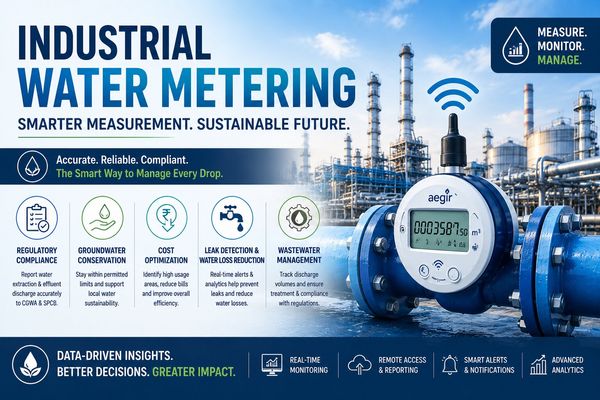
Water metering is critical for industries. Whether the goal is responsible resource usage, sustainability, regulatory compliance, or cost optimization, accurate measurement of water consumption is essential. In a water-stressed country like India, industries must monitor water usage efficiently to support long-term sustainability and operational resilience.
Modern smart water meters provide real-time monitoring and analytics, helping industries optimize water consumption while improving compliance and reporting. These technologies form a key part of modern smart water management systems.
Industries are required to report water extraction and effluent discharge volumes to regulatory authorities such as the Central Ground Water Authority (CGWA) and State Pollution Control Boards (SPCB).
Accurate metering helps:
Using digital water management solutions further simplifies reporting and compliance management.
Groundwater depletion is becoming a major concern across industrial corridors such as Bengaluru, Hosur, and Noida.
Accurate water monitoring helps industries:
These efforts align with broader water conservation and climate resilience strategies.
Water is a major operational expense for many industries.
Sub-metering individual processes such as:
helps identify high-consumption areas and improve efficiency.
Benefits include:
Industrial water losses often remain unnoticed until they become costly.
Modern IoT-enabled leak detection systems continuously monitor usage patterns and generate alerts when anomalies occur.
Advantages include:
These technologies also contribute to reducing non-revenue water losses and improving efficiency.
Water metering is equally important for wastewater treatment and discharge management.
Accurate monitoring helps industries:
Effective wastewater management supports long-term sustainability and environmental responsibility.
Compared to traditional monitoring methods, smart water meters offer:
Industries adopting smart metering solutions gain greater visibility into water usage and can make data-driven decisions that improve both sustainability and profitability.
Water metering is no longer just a compliance requirement—it is a strategic business tool.
By adopting smart water metering solutions, industries can improve compliance, reduce costs, detect leaks early, optimize water usage, and support sustainability goals.

2026-08-07
2026-05-22


