2026-04-27
•
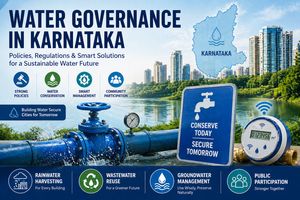
Karnataka has introduced strong regulatory measures to address urban water stress, focusing on conservation, reuse, and efficient water management. With cities like Bengaluru facing increasing water scarcity, policies such as the State Water Policy 2022 and BWSSB regulations are shaping a more sustainable water future.
Alongside policy measures, the adoption of smart water management systems and smart water meters is becoming essential to ensure effective monitoring and compliance.
The Karnataka State Water Policy 2022 focuses on Integrated Water Resources Management (IWRM) to ensure long-term sustainability.
These initiatives align with modern approaches such as digital water management and IoT-based monitoring, enabling real-time tracking of water usage and compliance.
The policy emphasizes enforcement through regulatory bodies such as:
Accurate measurement plays a key role in enforcement. Technologies like smart metering and consumption monitoring help track usage and reduce inefficiencies, especially in urban environments where Non-Revenue Water (NRW) is a major concern.
The Bangalore Water Supply and Sewerage Board (BWSSB) has implemented several regulations to address the city’s water crisis:
To ensure compliance, solutions like IoT-enabled water monitoring systems and real-time consumption tracking are increasingly important.
To improve water sustainability, Bengaluru is focusing on:
Technologies such as District Metered Areas (DMA) and leak detection systems play a crucial role in improving efficiency and reducing water loss.
Despite strong policies, several challenges remain:
Addressing these challenges requires a combination of regulation and technology, including smart water meters for accurate billing, monitoring, and leak detection.
Karnataka’s water governance framework is a strong step toward sustainable urban water management. However, effective implementation depends on combining policy enforcement with technology adoption.
By integrating smart water management systems, IoT monitoring, and real-time data analytics, cities like Bengaluru can significantly improve water efficiency, reduce losses, and ensure long-term sustainability.
2026-09-24

2026-08-07


